
Why “Eastern Gate”?
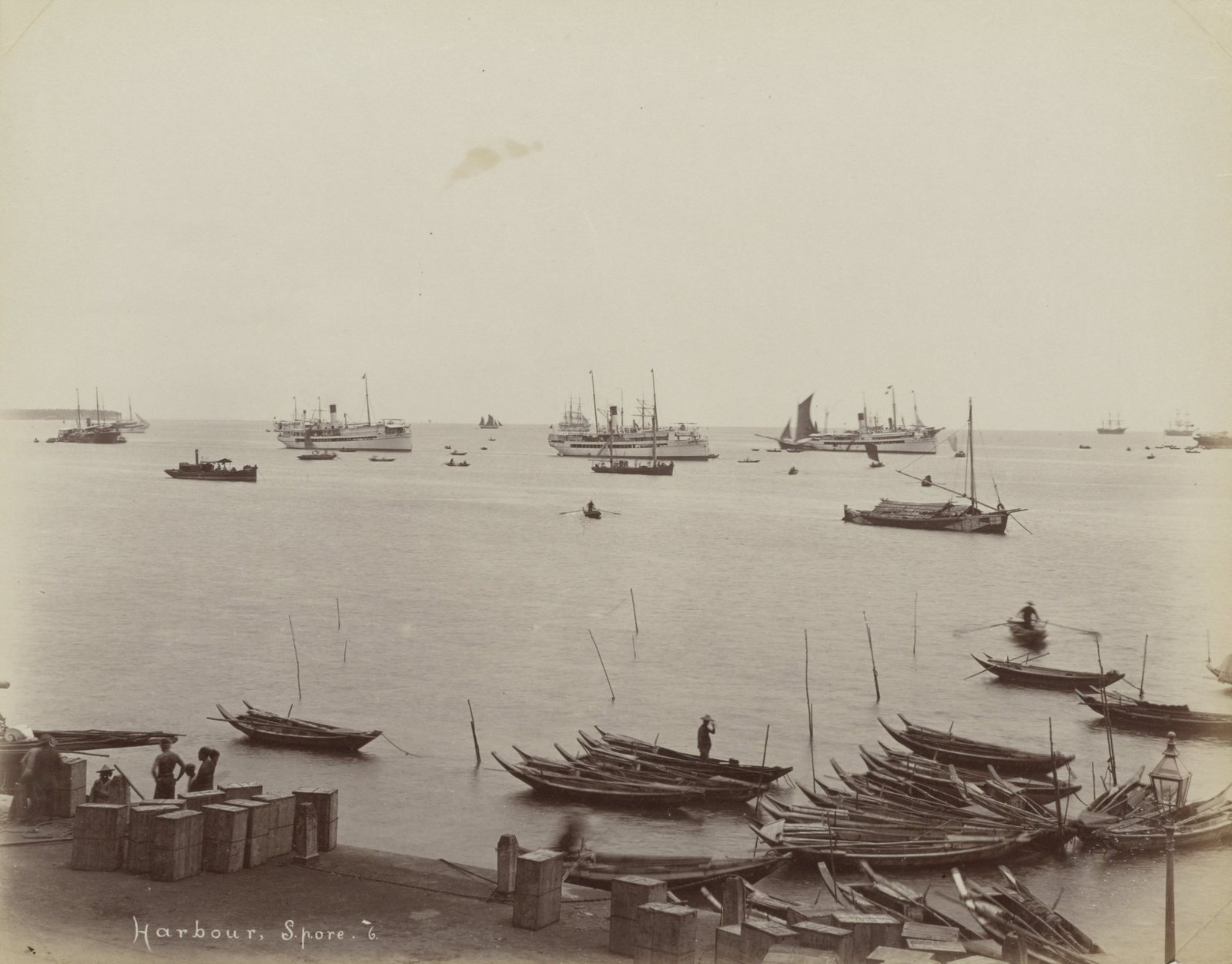
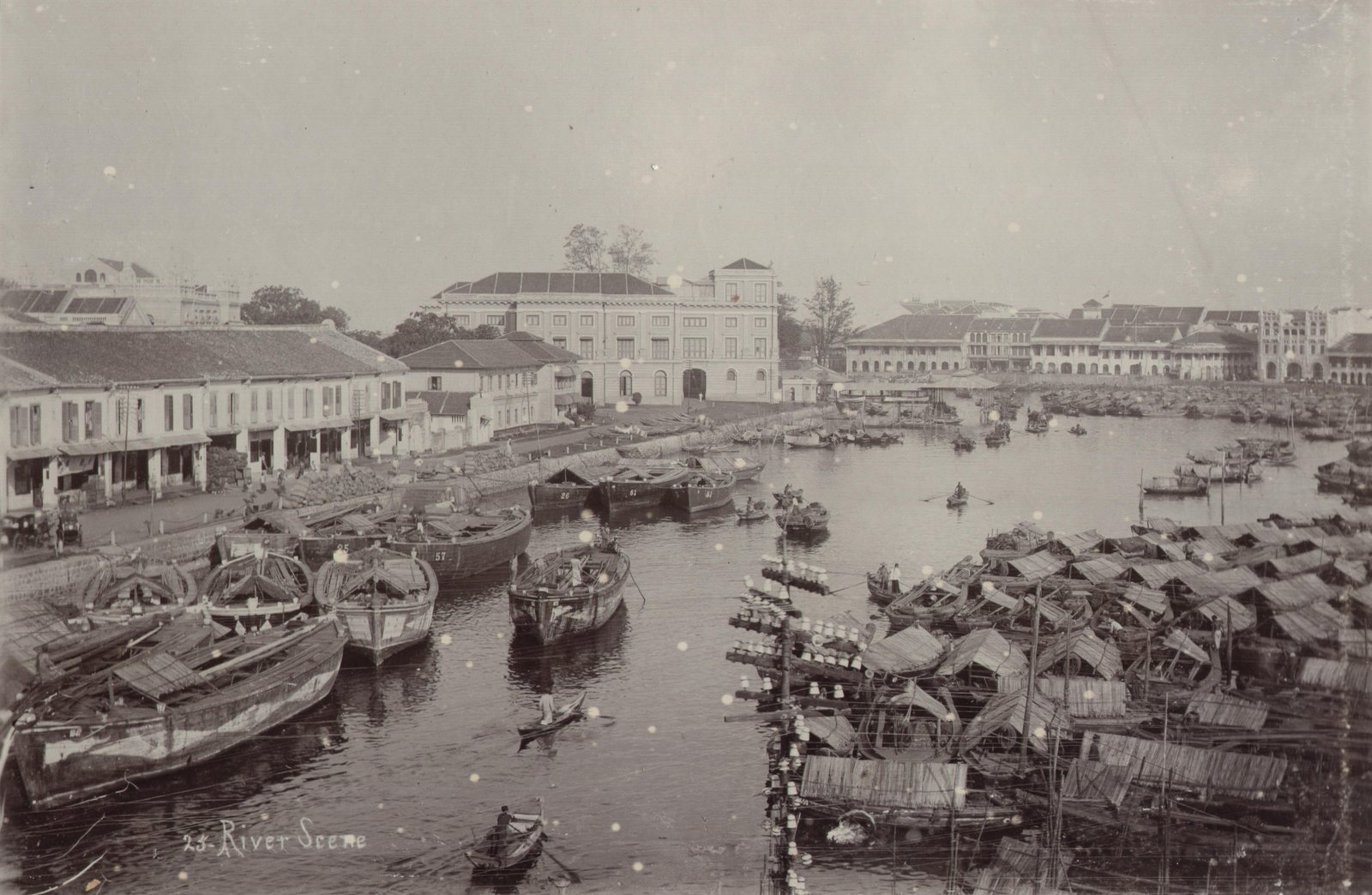
Eastern Gate Lodge No. 2970 was warranted on 14 May 1903 and consecrated in Singapore on 16 July 1903. The documents that fix those dates — the warrant, the entry on the register, the published lists of the Craft — record the name but not the reasoning behind it. What follows is therefore a reading of the name against the place and the year in which it was chosen, and is offered as a reading rather than as an account of what the founders decided.
Read that way, the name is not obscure. In 1903 a lodge in Singapore that wanted to name itself for where it stood had an obvious word to hand, because “gate” was the word the colony’s own administrators used for Singapore.
Singapore in 1903
The seat of government of the Straits Settlements had moved from Penang to Singapore in December 1832, and the Settlements became a crown colony under the Colonial Office in 1867. Government House, the Legislative Council and the headquarters of the colony’s military forces were all on the island, and the Governor who resided there was also, by virtue of his office, High Commissioner for the Federated Malay States. Sir Frank Swettenham held both posts in 1903: he was Governor of the Straits Settlements from November 1901 to April 1904, and High Commissioner until October 1903. Singapore, in other words, was the point at which the shipping lanes, the colony’s government and the administration of the protected Malay States all met.
Its commercial position was of the same kind. Singapore was a free port and the entrepôt of the region, drawing the produce of the Archipelago, the Malay States, Siam, French Indo-China, Borneo and Sarawak, and re-exporting it westward. The opening of the Suez Canal in 1869 had shortened the voyage from Europe to Southeast Asia by roughly a third and turned the port into a coaling and refitting station on the main line of steamship traffic between Europe and China and Japan. Writing in April 1905, Swettenham put the value of Singapore’s trade in 1903 at nearly £70,000,000, ranked the port eighth in the world by the tonnage of shipping calling there, and noted that some 200,000 tons of coal were kept standing on its wharves.
He also described the island’s position in terms that are worth quoting exactly, because they are contemporary with the lodge’s founding and come from the man who was governing the colony from Singapore when the warrant was issued. Singapore, he wrote, stood “at the very gate of the Further East, in the narrow waters which divide the Straits of Malacca from the China Sea.” In the same essay he set Colombo, Singapore and Hong Kong alongside Gibraltar, Malta and Aden as the stations that “guard the great ocean highway from Europe to China and Japan” — a chain of gates along a single road.
The year itself sharpened the image. On 1 January 1903 the Singapore–Kranji railway opened from the Singapore terminus at Tank Road to Bukit Timah, and on 10 April the line was extended to Woodlands on the Johore Strait, with a steam ferry onward to the peninsula. The warrant for a new lodge in Singapore is dated the following month. The island that had long been the sea gate of the eastern trade now had a land gate northward as well, toward the tin and, increasingly, the rubber of the Malay States whose produce passed through the port.
None of this proves anything about the founders’ intentions. It does establish that in 1903 “gate” was ordinary descriptive vocabulary for Singapore rather than a figure of speech that needed inventing.
The East in masonic usage
There is a second sense in which the words would have been heard, and it is not a private one. Published masonic reference works state plainly that a lodge is held to be situated east and west, that the Master’s chair stands in the east, and that the east is spoken of as the place of light — an inheritance, those works explain, from the orientation of churches and, before that, from the ancient regard for the quarter of sunrise. The symbolism of the Craft is built around the Temple at Jerusalem, a building whose gates are part of the description. For a lodge meeting on the far side of the world from Freemasons’ Hall in London, the East was both a direction on the chart and a settled term of masonic reference.
A name combining the two readings would have done double duty: the eastern gate of the sea road, and the east as the quarter the Craft has always faced. English lodges founded overseas in this period frequently chose names that worked in exactly that doubled way.
The pattern in the register
The English register supports the point. Lodges taking their names from the East and its imagery run through it across more than a century: Eastern Star Lodge No. 95, warranted in London in 1802; Eastern Star Lodge No. 1189, warranted at Bombay in 1867; Star of the East Lodge No. 880, still meeting on Zakynthos; Eastern Concord Lodge No. 3885, warranted at Chefoo in 1918; East and West Lodge No. 5410, warranted in London in 1933. The lodge’s own jurisdiction carried the same word: the Provincial Grand Lodge of the Eastern Archipelago was constituted on 4 December 1858, with Singapore as its headquarters, and it is the District Grand Lodge of the Eastern Archipelago today. A lodge founded in Singapore in 1903 was founded in a district whose name already began with “Eastern.”
The date and number are also worth reading together. In 1903 the English register was approaching three thousand, and lodges were being added across the empire at a steady rate: East Africa Lodge, No. 3007, was warranted at Zanzibar in the same year. Within the District, Eastern Gate came after three older Singapore lodges — The Zetland in the East Lodge, No. 508, of 1845; The Lodge of St. George, No. 1152, of 1867; and Lodge St Michael, No. 2933, of 1902 — and it was the second lodge constituted in Singapore in two years. The Craft on the island was expanding, and a new lodge needed a name of its own.
It is worth noticing what the three older names had in each case taken. Zetland commemorated a Grand Master; St. George and St Michael were patronal. English lodge names are most often drawn from a place, a patron saint, a notable figure, or a masonic virtue. “Eastern Gate” belongs to none of those categories. It is positional: it says where the lodge stood rather than whom it honoured.
How the lodge read the name in 1908
One document does survive in which the lodge speaks about the name itself. It is a small, worn card, kept with the lodge’s papers and headed “To be returned” in a firm hand. On it is a drawing of the lodge’s device — a gate between two pillars, a sunburst rising behind the arch, two stars, and the words EASTERN GATE LODGE No. 2970 set round the rim — and beneath the drawing, in ink, a few lines of explanation, signed and dated 8 May 1908 by a member of the lodge.
This design is intended to represent:— A Gate (or Gateway) behind which the sun is rising; this is therefore representative of the lodge name ie. EASTERN GATE
The steps rising to the gate should be seven in number
The note explains a drawing rather than a decision. It was written five years after the consecration, it gives no reason for the choice of name, and it does not claim to. What it does show is how the lodge itself read those two words almost at once, and how literally: a gate, with the sun coming up behind it. Every banner the lodge has carried since has been built on that reading, and so has the seal it uses today. The card is reproduced, with the rest of the banner’s history, on The Banner.
What can and cannot be said
A lodge name is evidence of how its founders wished to be identified, not a statement of their reasons, and no record available to us gives those reasons. What can be said is narrower, and it is enough to be worth saying.
In 1903 Singapore was the capital of the Straits Settlements, the seat of the Governor who was also High Commissioner for the Federated Malay States, a free port ranked among the greatest in the world by shipping, the market of the Archipelago, and a coaling station on the highway between Europe and the Far East. Contemporaries, including the Governor himself, described that position as a gate. The Craft in the region was administered from Singapore under a jurisdiction named for the Eastern Archipelago, and the East was already a fixed term of masonic reference. A lodge constituted in that place, in that year, under that district, and choosing a name that pointed to its position rather than to a person, arrived at “Eastern Gate.”
The lodge has kept the name through every subsequent change of address, including the years from 1918 when it met at the Masonic Hall in Kuala Lumpur, its return to Singapore in 1921, and its move to Freemasons’ Hall at 23A Coleman Street in 2012. Whatever the founders had in mind, the name has proved portable, which is a quality positional names do not always have.