
The English Constitution
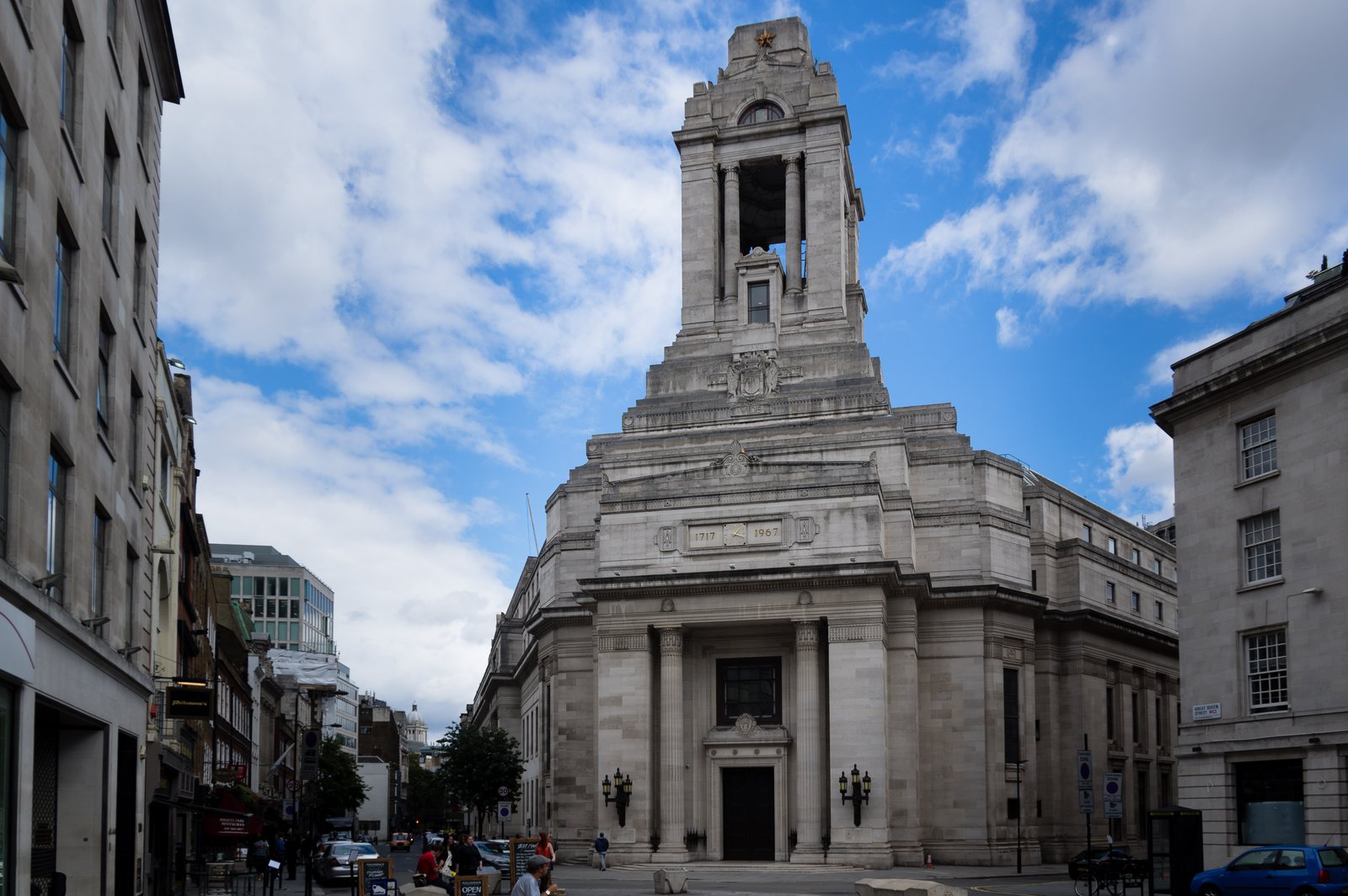
Eastern Gate Lodge No. 2970 is a lodge of Freemasons working under the United Grand Lodge of England. Its warrant of constitution is dated 14 May 1903, and the lodge was consecrated in Singapore on 16 July 1903. A warrant of confirmation was issued on 1 May 1946, and a centenary warrant on 16 July 2003. The lodge carries the number 2970 on the register of the United Grand Lodge of England, and it meets on the third Thursday of every month at Freemasons’ Hall, 23A Coleman Street, Singapore, within the District Grand Lodge of the Eastern Archipelago.
The recorded meeting places of the lodge are Freemasons’ Hall, Singapore, Straits Settlements, from 1903; the Masonic Hall, Kuala Lumpur, Federated Malay States, from 1918; the Masonic Hall, Singapore, Straits Settlements, from 1921; and Freemasons’ Hall, 23A Coleman Street, Singapore, from 2012.
What “English Constitution” means
The United Grand Lodge of England is the governing body of Freemasonry in England, Wales, the Channel Islands, the Isle of Man, and in Districts overseas. It dates its descent from the Grand Lodge formed in London in June 1717, and took its present name and form in December 1813, when the two rival English Grand Lodges of the eighteenth century united. Its rule book is the Constitutions of the Antient Fraternity of Free and Accepted Masons under the United Grand Lodge of England, universally known as the Book of Constitutions.
To say that a lodge is “of the English Constitution” — often abbreviated to E.C. after the lodge number, as in Eastern Gate Lodge No. 2970 E.C. — is to say two things. First, the lodge holds its warrant from the Grand Master of the United Grand Lodge of England and is entered on that Grand Lodge’s register. Second, its government, its officers, its qualifications for membership, its discipline and its administration are all regulated by the Book of Constitutions rather than by the laws of any other Grand Lodge.
This matters because Freemasonry in the British Isles has never been governed from a single centre. The Grand Lodge of Ireland, formed by 1725, and the Grand Lodge of Scotland, founded in 1736, are separate and sovereign Grand Lodges in their own right, each with its own constitution, its own register, its own officers and its own overseas Provinces or Districts. A lodge of the Scottish Constitution answers to Edinburgh; a lodge of the Irish Constitution answers to Dublin; a lodge of the English Constitution answers to London. The three are frequently described together as the Home Grand Lodges, and they cooperate closely: a formal concordat drawn up in 1905, and republished with a relaxation agreed in 2005, governs such matters as the mutual notification of suspensions and expulsions, the standing of installed Masters visiting across the three constitutions, and the conditions under which a new Grand Lodge in a shared territory is to be recognised. Cooperation, however, is not subordination. In the statement of the aims and relationships of the Craft first issued in 1938 and repeatedly reaffirmed, the Grand Lodge of England described itself as a sovereign and independent body which “does not recognize or admit the existence of any superior Masonic authority, however styled.”
In this region these constitutions are met with side by side. The halls of the District Grand Lodge of the Eastern Archipelago also host lodges of the Scottish, Irish and French Constitutions, and it is common for brethren here to hold membership under more than one.
How an English lodge is set up and registered
A new lodge under the English Constitution does not simply form itself. It is created by an act of the Grand Master, recorded in a document, and entered in a register, and the steps are set out in the Book of Constitutions.
The petition. An application for a warrant to hold a new lodge is made by petition to the Grand Master, signed by not fewer than seven Master Masons who are regularly registered under the English Constitution. For a lodge proposed to meet in a District overseas, it is sufficient that at least four-sevenths of the signatories are so registered; the remainder must be registered under a Grand Lodge recognised by the United Grand Lodge of England, and must declare in writing their adherence to the Book of Constitutions and promise due obedience to the Grand Master. The petition names the proposed lodge, the place and days of meeting, and the three brethren recommended as the first Master and the two Wardens. It must be accompanied by certificates showing that no signatory is indebted to a lodge he belongs to or has belonged to, and by a recommendation signed in open lodge by the Master and Wardens of an existing English lodge, with the approval of a majority of the brethren present and after notice on the summons.
The route through the District. Where the proposed lodge is to meet in a Metropolitan Area, Province or District, the petition goes first to the Metropolitan, Provincial or District Grand Master, who transmits it with his own observations to the Grand Secretary for the Grand Master’s decision. In the case of a District, the Grand Master may authorise the District Grand Master to grant a provisional warrant so that the new lodge can begin work while the regular warrant of constitution is prepared.
The warrant of constitution. The warrant is the lodge’s founding instrument and the authority under which it meets. It remains the property of the Grand Master; it is entrusted to each Master at his installation, to be held in safe custody on the Grand Master’s behalf; it must be produced at every meeting; and, apart from three lodges of immemorial constitution that pre-date the Grand Lodge itself, no lodge may meet without one. A warrant may not be sold, transferred or endorsed without the Grand Master’s authority.
The consecration. A new lodge must then be solemnly constituted according to ancient usage, by the Grand Master or by another Grand Officer, or a Master or Past Master of a lodge, appointed to act for him. On that occasion the lodge is consecrated and the Master named in the warrant is installed and his Wardens invested. Until a lodge has been regularly constituted and registered, it is not acknowledged as a lodge: its officers are not admitted as such to Grand Lodge or to a Provincial or District Grand Lodge, and its members are not entitled to masonic privileges. For Eastern Gate Lodge these two stages stand just over two months apart — the warrant of 14 May 1903, and the consecration in Singapore on 16 July 1903.
The number on the register. Every lodge must be distinguished by a name or title and by a number. Lodges rank in precedence in the order of their numbers as registered in the books of Grand Lodge, so the number is not decorative: it records the lodge’s place in the sequence of English lodges. 2970 has been this lodge’s number since its registration in 1903. Each lodge also has a local rank as well as a general one. If a lodge moves from one masonic area to another it keeps its number and its precedence in Grand Lodge, but within its new area it ranks after the lodges already registered there, seniority in a District being fixed by the date of entry in the District Grand Lodge’s books.
The warrant of confirmation. Where a warrant is lost, or improperly withheld from those lawfully entitled to hold it, or withheld by competent masonic authority, the lodge must suspend its meetings until a warrant of confirmation has been petitioned for and granted by the Grand Master; and if the original warrant is afterwards found or restored, the warrant of confirmation is returned. The document of 1 May 1946 in this lodge’s record is of that class.
The centenary warrant. Permission for the Master and members of a lodge to wear a centenary jewel is granted by the Grand Master on petition, in which the origin and regular working of the lodge must be set out and its uninterrupted existence for one hundred years proved. Eastern Gate Lodge’s centenary warrant is dated 16 July 2003, a hundred years to the day after its consecration.
Provinces in England and Wales, Districts overseas
The Grand Master has power to form any specified area in England into a Province, and overseas into a District. In each case a Provincial or District Grand Lodge is formed and given jurisdiction within that area, and the Provincial or District Grand Master exercises authority there under a patent of appointment from the Grand Master.
In practice the pattern is as follows. There are forty-eight Provinces covering England, Wales, the Channel Islands and the Isle of Man, each headed by a Provincial Grand Master; most lodges meeting in London are administered by the Metropolitan Grand Lodge of London; and overseas there are thirty-two active Districts, each headed by a District Grand Master, together with four Groups of lodges, each headed by a Grand Inspector, in places where the number of lodges is too small for a District. A handful of lodges abroad are administered directly from Freemasons’ Hall in London. Roughly twenty thousand members belong to the overseas lodges of the English Constitution.
A District Grand Lodge is the overseas equivalent of a Provincial Grand Lodge. It may frame and revise by-laws for its own government and make regulations to be observed by the private lodges in the District, provided that nothing in them conflicts with the Book of Constitutions and that they are approved by both the District Grand Master and the Grand Master. A District of seven or more lodges has its own Board of General Purposes. What a District Grand Lodge is not is a separate Grand Lodge: it neither issues warrants nor keeps the definitive register. The warrant of a lodge in a District still comes from the Grand Master in London, and the lodge still appears on the English register.
The reason English lodges exist overseas at all, and the reason they are not found everywhere, follow from an agreement among the three Home Grand Lodges. Lodges were warranted abroad from the eighteenth century onwards as British trade and administration spread. But once a new Grand Lodge is recognised as sovereign in a territory, the three Home Grand Lodges surrender their right to warrant new lodges within its jurisdiction, while the rights of lodges that do not join the new body are safeguarded.
The District Grand Lodge of the Eastern Archipelago
The District has grown from the Provincial Grand Lodge of the Eastern Archipelago, constituted on 4 December 1858, with Singapore as its headquarters. Its earliest antecedents lie further back and further west, in lodges founded by East India Company servants in Sumatra in the late eighteenth century and in Penang in the early nineteenth.
Today the District consists of forty-three lodges spread across three countries — Singapore, Malaysia and Thailand — meeting in thirteen halls and five other locations. It is headquartered at Freemasons’ Hall, Singapore, while most of its administration is carried out from the Read Masonic Centre in Kuala Lumpur. Some of its lodges work the Revised ritual and others Emulation; Eastern Gate Lodge works the Revised. In a District of many first languages, the ritual of all forty-three lodges is worked in English.
Eastern Gate Lodge, warranted in 1903, is the seventh lodge of the District in order of seniority.
Registration under local law
Masonic authority and legal standing are two different things, and an English lodge overseas holds both. Its masonic authority comes from its warrant and its place on the register of the United Grand Lodge of England. Its legal standing comes from the country in which it meets: all lodges of the District Grand Lodge of the Eastern Archipelago are registered in their respective countries under the local register of societies. In Singapore that register is kept by the Registry of Societies, and Eastern Gate Lodge No. 2970 E.C. is recorded on it at the lodge’s Coleman Street address.
There is nothing incidental about this. Among the Antient Charges read to every Master Elect before his installation is the undertaking to be a peaceable subject and cheerfully to conform to the laws of the country in which he resides, and the published aims of the Craft require every Freemason to pay due obedience to the law of the state in which he lives or which affords him protection.
American lodges and lodges elsewhere
Visitors often assume that Freemasonry has one worldwide head, or that the United States has a national Grand Lodge in the way England has the United Grand Lodge of England. Neither is so, and the difference is worth stating plainly.
The United Grand Lodge of England describes a Grand Lodge as the governing body of Freemasonry within a particular territory, where territory usually means a country or a state. In England, Wales, the Channel Islands and the Isle of Man, that territory is served by one Grand Lodge, which warrants lodges directly and administers them through Provinces at home and Districts overseas.
In the United States the unit of masonic sovereignty is the state, not the nation. Each state, together with the District of Columbia, has its own Grand Lodge, sovereign within its own borders, with its own constitution and code, its own Grand Master and Grand Lodge officers, and its own annual communication. There is no national Grand Lodge above them. Proposals for a general or national Grand Lodge of the United States were put forward in the 1840s and 1850s and came to nothing, and no serious attempt has been made since; American Grand Lodges have consistently held that each is a sovereign body in itself.
Several practical differences follow.
The founding document of an American lodge is normally called a charter rather than a warrant, and it is granted by the Grand Lodge of the state. Where an English petition travels to the Grand Master through a Provincial or District Grand Master, an American petition is made to the Grand Lodge of the state, usually with the consent of the nearest existing lodge; in the interval between annual communications the Grand Master may grant a dispensation allowing the new lodge to work until the Grand Lodge can consider the charter. Numbering runs within each state’s own register, and an American lodge number is therefore not comparable with a number on the English register.
Many American Grand Lodges divide their territory into masonic districts, each with a District Deputy Grand Master who acts as the Grand Master’s personal representative and visits the lodges in his district each year. The word “district” therefore appears in both systems with different meanings. An American masonic district is a subdivision of the same Grand Lodge that chartered the lodges within it. A District of the English Constitution is an administrative tier of a Grand Lodge in another country, and the lodges in it hold warrants from, and are registered by, that distant Grand Lodge.
Relations between Grand Lodges are maintained by recognition rather than by any central authority. Each Grand Lodge decides for itself which others it recognises as regular, and publishes its own list, so the lists are not identical. The United Grand Lodge of England publishes the Grand Lodges it recognises, which for the United States include a Grand Lodge for each of the states and the District of Columbia, and many Prince Hall Grand Lodges. It notes that while it will generally recognise only one Grand Lodge in a country or territory, it makes exceptions in certain territories, including United States states, where two Grand Lodges have amicably agreed to share the territory while remaining separate and sovereign entities in their own right.
North American Grand Masters meet annually at the Conference of Grand Masters of Masons in North America, whose membership includes the Grand Lodges of the states of the United States and the District of Columbia and Puerto Rico, the Canadian provinces, the York Grand Lodge of Mexico and the American-Canadian Grand Lodge of Germany. It is a meeting for consultation and fellowship, not a governing body, and it does not legislate for the Grand Lodges that attend.
What holds this dispersed arrangement together is a shared standard of regularity rather than a shared administration. The basic principles for recognition published by the United Grand Lodge of England in 1929 require, among other things, that a Grand Lodge be of regular origin, established lawfully by a recognised Grand Lodge or by three or more regularly constituted lodges; that it have sovereign jurisdiction over the lodges under its control; that belief in a Supreme Being be an essential qualification for membership; that the Volume of the Sacred Law be open whenever a lodge is at work; and that the discussion of religion and politics in lodge be prohibited. Grand Lodges meeting that standard differ widely in their law, their administration and their ceremonial detail, and remain in fraternal relations notwithstanding.
For members, the practical consequence is straightforward. A Freemason of the English Constitution who wishes to visit a lodge abroad should first check, through his Provincial or District Grand Secretary, that the jurisdiction concerned is recognised. A visitor to an English lodge must be a member of a recognised jurisdiction, must produce a Grand Lodge certificate or other documentary proof of masonic identity, and must be able to show that he is in good standing in his own lodge.
In summary
Eastern Gate Lodge No. 2970 is one lodge on the register of the United Grand Lodge of England. It was warranted on 14 May 1903 and consecrated in Singapore on 16 July 1903, it received a warrant of confirmation on 1 May 1946 and a centenary warrant on 16 July 2003, and it meets on the third Thursday of every month at Freemasons’ Hall, 23A Coleman Street, Singapore. Its masonic authority runs from London through the District Grand Lodge of the Eastern Archipelago; its legal standing rests on registration as a society in Singapore. Scotland and Ireland have their own Grand Lodges, and the United States has one for each state; all of them are separate sovereignties, related to the English Constitution by recognition rather than by subordination.